
Ethical Physiotherapy in a Digital Age | Dr. Alpa Purohit’s Insights
- 1. The Need for Standardization in Physiotherapy Practice
- 2. Why does standardization matter in Physiotherapy?
- 3. Technology as a Bridge to Evidence-Based Care
- 4. Telerehabilitation: Solving Accessibility Gaps
- 5. The Risks of Poor Digital Documentation
- 6. Global Compliance & Indian Readiness
- 7. Ethics at the Core of Physiotherapy Practice
- 8. Digital Documentation = Transparency + Trust
- 9. Technology and Accountability Go Hand in Hand
- 10. Ethical Empowerment Through EHRs
- 11. Should Digital Documentation Be Mandatory?
- 12. Will AI Help with Ethical Audits?
- 13. AI in Complex Clinical Decision-Making
- 14. Why Plus Physio Stands Out
- 15. Adopting Digital Physiotherapy: Where to Start?
- 16. Ethical Physiotherapy in a Digital Age - Closing Thoughts
- 17. Full Conversation Transcript
In the niche of healthcare, physiotherapy is no longer limited to manual treatments and handwritten notes. A new era has arrived—where technology meets ethics, and patient care is smarter, faster, and more accountable than ever.
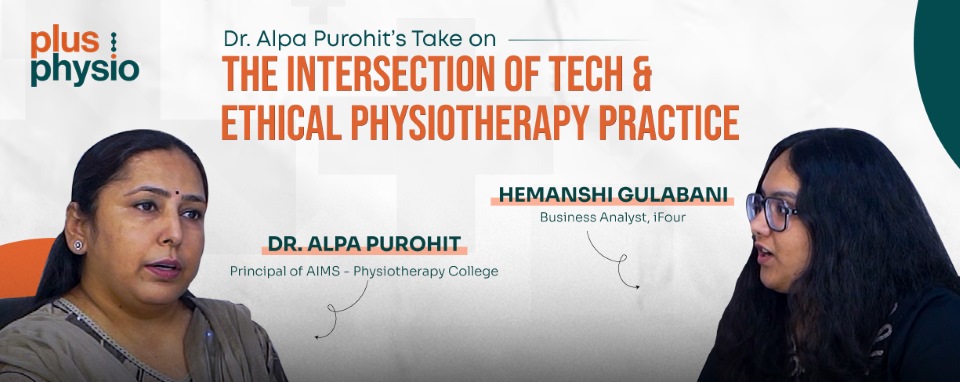
To delve into this vital intersection, Plus Physio sat down with Dr. Alpa Purohit, Principal at AIMS Physiotherapy College and a respected ethical committee member in the field. With years of experience as a clinician, researcher, and academic leader, she shared powerful insights on how standardized protocols, digital tools, and ethical accountability are reshaping physiotherapy in India (and beyond).
This blog brings you the core highlights from the conversation, sharing highlights on not just the role of digitalization and AI in Physiotherapy, but also how they intersect with standardised and Ethical Physiotherapy practice.
The Need for Standardization in Physiotherapy Practice
Standardization in physiotherapy ensures consistent, high-quality care across practitioners, reducing errors and improving patient outcomes. It also helps align ethical practices with evolving technologies.
Why does standardization matter in Physiotherapy?
According to Dr. Purohit, standardized practices ensure consistent, high-quality treatment regardless of where a patient seeks care. The National Council of Allied Health Care Professionals (NCHP) has already introduced the “One Nation, One Syllabus” approach to align physiotherapy education and practice across India.
Clinical Practice Guidelines (CPGs) play a major role in:
- Evidence-based assessments
- Standard treatment protocols
- Flexible yet reliable decision-making
- Continuous professional upgrading
For physiotherapists, staying updated isn’t optional—it’s an ethical responsibility.
Technology as a Bridge to Evidence-Based Care
Digital health tools aren't just add-ons—they're transforming how therapists treat, monitor, and support patients.
Key digital therapeutics Dr. Purohit highlighted include:
AI-powered chatbots
Virtual Reality therapy sessions
Wearable devices for vitals, mobility, and sleep tracking
Mobile apps for CBT and mindfulness programs
These tools improve:
Accuracy of data
Remote monitoring
Long-term follow-up
Patient engagement
They bring physiotherapy closer to global standards—without replacing the human touch.
Telerehabilitation: Solving Accessibility Gaps
India faces a shortage of physiotherapists, especially in rural regions. Dr. Purohit explained how telerehabilitation is closing that gap.
Through digital consultations and remote assessments, therapists can:
- Monitor progress virtually
- Modify treatment plans on time
- Educate patients and caregivers
- Extend quality care beyond clinic boundaries
It’s a leap toward global alignment in rehabilitation practices.
The Risks of Poor Digital Documentation
Digital documentation is replacing handwritten records—and for good reason. However, without standard protocols, it can be risky.
Concerns Dr. Purohit emphasized:
Data theft
Misuse of patient information
Lack of confidentiality safeguards
Poor auditability
Digitization isn’t just about convenience—it must be handled responsibly.
Global Compliance & Indian Readiness
When asked about global alignment, Dr. Purohit stressed that India is already moving in the right direction with technology adoption. Wearables, digital platforms, and remote access tools now support:
Real-time monitoring
Treatment customization
Cross-border patient access
Better research opportunities
She also highlighted the rise of physiotherapy entrepreneurship programs and research grants—encouraging innovation that’s both ethical and patient-friendly.
Ethics at the Core of Physiotherapy Practice
Ethics in physiotherapy begins with respect for patient priorities. Dr. Purohit shared a powerful incident where clinical observation differed from what the caregiver believed was the main issue. Instead of imposing her decision, she first acknowledged the patient’s preference—reflecting true ethical care.
Ethics, according to her, revolve around:
Patient autonomy
Informed decision-making
Respectful communication
Cultural sensitivity
And technology should support this—not overshadow it.
Digital Documentation = Transparency + Trust
Giving patients access to their own therapy data builds confidence and motivation. Digital records improve:
- Progress tracking
- Transparency in treatment
- Accountability of therapists
- Patient empowerment
This shared visibility creates lasting trust between patients and practitioners.
Technology and Accountability Go Hand in Hand
Dr. Purohit believes that therapists must first learn to use digital tools correctly. Only then can they:
Provide accurate data
Access updated research
Deliver better outcomes
Maintain ethical integrity
Technology is not a replacement—it’s a responsibility.
Ethical Empowerment Through EHRs
Electronic Health Records (EHRs) and digital systems reduce manual errors and protect sensitive information. However, Dr. Purohit insists on three key safeguards:
Accountability & Confidentiality
Guidance and Support for Patients
Prevention of Data Misuse
Digital responsibility is a shared duty—not a checkbox.
Should Digital Documentation Be Mandatory?
Absolutely, says Dr. Purohit.
Regulatory bodies should:
Standardize digital physiotherapy records
Align with broader healthcare systems
Improve tracking and compliance
Strengthen patient data security
It’s not just futuristic—it’s essential.
Will AI Help with Ethical Audits?
AI can make auditing faster and more accurate, especially in research and outcomes assessment.
But Dr. Purohit adds a crucial disclaimer:
“Humans can develop AI, but we cannot replace humans with AI.”
Confidentiality, judgment, and empathy still rely on people.
AI in Complex Clinical Decision-Making
From spinal surgeries to neurological conditions, AI-backed systems are reducing complications and accelerating recovery. Advanced technologies are helping physiotherapists:
- Plan safer interventions
- Predict risks
- Personalize rehabilitation
- Shorten recovery timelines
AI is not a substitute—it's a clinical ally.
Why Plus Physio Stands Out
Dr. Purohit highlighted how platforms like Plus Physio make physiotherapy practice more seamless and patient-centric.
With features like:
Appointment scheduling
Patient data access
Financial tracking
Digital records
Performance monitoring
…therapists can focus more on care and less on paperwork.
Adopting Digital Physiotherapy: Where to Start?
Her recommended approach:
1. Begin with small pilot groups
2. Train in-house teams on digital tools
3. Choose the right platform aligned with your clinic’s framework
4. Ensure compatibility across devices (mobile/tablet)
5. Use different software for OPD and IPD setups
Digital transformation should be strategic—not rushed.
Ethical Physiotherapy in a Digital Age - Closing Thoughts
The future of physiotherapy lies in the intelligent fusion of technology, ethics, and patient-first care.
From standardized guidelines and telerehabilitation to AI audits and digital transparency, Dr. Alpa Purohit’s insights reveal a clear message:
Technology should enhance physiotherapy—not replace its soul.
With ethics at the core and innovation as an enabler, the profession is entering a new era of accessibility, accountability, and excellence.

Listen to our podcast
Hear from real physiotherapists who’ve tried everything — what finally worked, what didn’t, and how PlusPhysio helped simplify the chaos.
Full Conversation Transcript
Check out the verbatim transcript of the conversation between Dr. Alpa Purohit and Hemanshi in original format.
Dr. Alpa Purohit’s Take on the Intersection of Tech and Ethical Physiotherapy

Recent Posts
Paperwork to Smart Software Dr. Roma Shah’s Guide
August 11, 2025