
Paperwork to Smart Software Dr. Roma Shah’s Guide
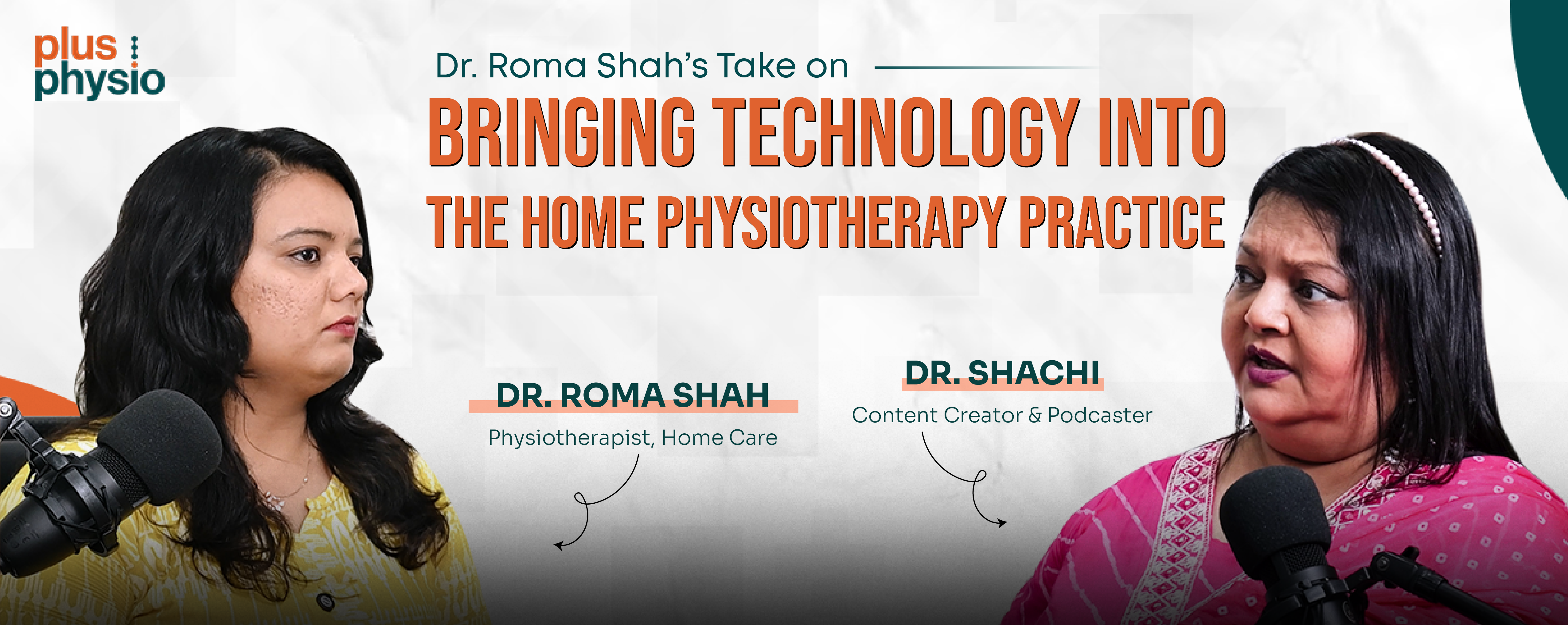
When it comes to physiotherapy, every practitioner has their own style. Some run busy clinics with advanced machines, while others bring care directly to a patient’s doorstep. Dr. Roma Shah belongs to the latter group — a home physiotherapist passionate about helping patients regain movement and live pain-free lives.
Recently, she spoke with Dr. Shachi about her journey, why she still relies on paperwork, and how technology could make her work more efficient.
A Young Practitioner with a Clear Purpose
Dr. Roma graduated in 2018 with a Bachelor’s in Physiotherapy. Her career started in multiple physiotherapy clinics, but for the last year, she has been offering therapy at patients' homes.
Her main focus?
Geriatric physiotherapy (helping elderly patients improve mobility)
Musculoskeletal conditions like knee arthritis, spinal cord issues, back pain, and joint pain
“My motto is to treat patients and give the best therapy at home, conveniently.”
Still Relying on Paperwork
For now, Dr. Roma keeps her records — from patient details to payment status — on paper. She sometimes uses WhatsApp for appointments, but admits it's not consistent.
Why stick to paper?
She finds it clear and familiar, but there are trade-offs:
Missed follow-ups
Miscommunication about payments
No visual or data-driven way to track patient progress or her own growth
“Sometimes I mess up follow-ups… sometimes I miss recording payments. There's no platform to see growth in numbers or graphs.”
Fears About Software
Like many physiotherapists starting out, Dr. Roma has hesitations:
- Cost: assuming it's too expensive for small practices
- Data security: concern about patient information being leaked
- Usability: worry about whether it will be convenient for her workflow
Recognizing the Need for Tech
Despite her concerns, Dr. Roma knows that technology could save her hours every day. With 8-10 patient visits daily, she spends 1-2 hours on manual recordkeeping. Those hours could be spent treating more patients if she had an integrated system for:
Appointment scheduling
Follow-up reminders
Payment tracking
Exercise prescriptions
She's now exploring software options and is open to solutions tailored for small physiotherapy practices.
Experience with Therapy Machines
While her home visits make it difficult to use large, AI-powered rehab machines, Dr. Roma does carry portable devices like:
Muscle stimulators
Electrotherapy units
TENS therapy machines
Ultrasound therapy devices
She acknowledges that bigger machines can give excellent results — but they're not practical for home-based work.
Her Advice to Fellow Physiotherapists
For other practitioners, Dr. Roma's message is clear:
“Software can help us maintain patient records, track growth, and access data anywhere. Paperwork is harder to manage and not easily accessible.”
She believes that integrating technology into physiotherapy isn't just about convenience — it's about improving patient care through better organization and follow-up.

Listen to our podcast
Hear from real physiotherapists who’ve tried everything — what finally worked, what didn’t, and how PlusPhysio helped simplify the chaos.
Full Conversation Transcript
The following is a transcription of the conversation between Dr. Roma Shah and Dr. Shachi:
Final Thoughts
Dr. Roma's story reflects a common stage in many young physiotherapists' careers — balancing traditional, hands-on methods with the possibilities technology can offer.
She may still be working with pen and paper, but her openness to exploring the right software is the first step toward making her home physiotherapy practice more efficient, scalable, and patient-friendly.

Recent Posts

Paperwork to Smart Software Dr. Roma Shah’s Guide
August 11, 2025