
Rotator Cuff Tear: Guidelines, Protocols & Predictors of Success

On June 17, 2026, PlusPhysio (powered by iFour Technolab) hosted a webinar called “Rotator Cuff Tear: Guidelines, Protocols & Predictors of Success”.
This webinar focused on a common issue in rehab practice - rotator cuff tears. It was led by Dr. Vasav Somani, an orthopedic surgeon who specializes in shoulder, knee, and elbow conditions.
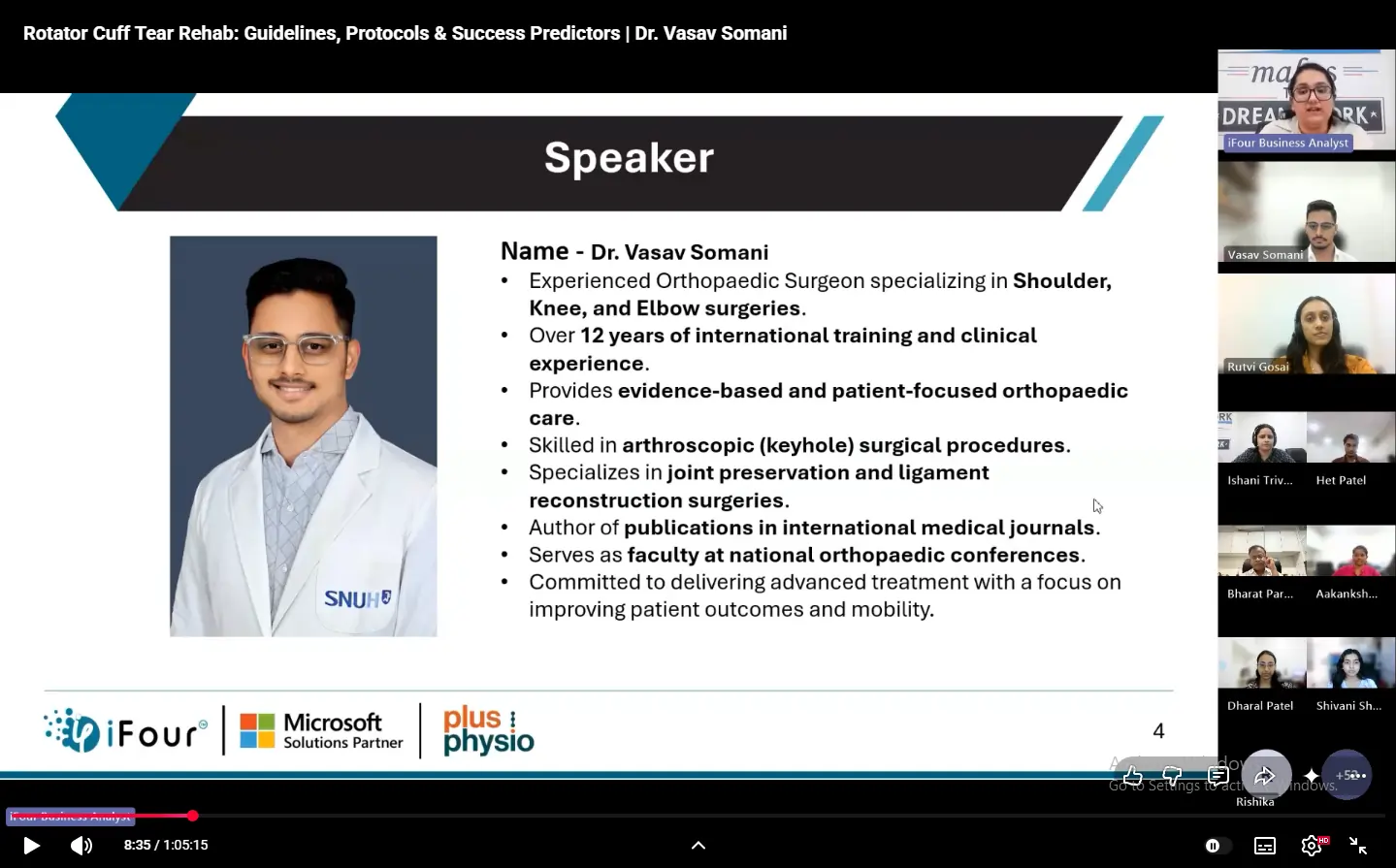
The session brought together physiotherapists seeking clearer guidance on treatment choices, rehab plans, and predicting outcomes.
At the start, Dr. Mahesh, Miss Manju, Mr. Mansour, and Dr. Duvish introduced themselves and talked about the various therapies they provide at their clinic. They highlighted their specific fields and the treatment strategies they employ.

From the start, it felt practical. But after sharing real cases and struggles from their clinics, the session became more of a discussion than a lecture.
The main goal was simple: not just how to treat rotator cuff tears, but how to decide which patients improve with rehab and which might need surgery.
Real-World Clinical Challenges Set the Tone
The audience engagement started early with practitioners sharing experiences from their clinics.
Mr. Mansour, a sports physiotherapist, highlighted a concern many rehabilitation professionals encounter:
Similarly, Dr. Rishika described a challenging case involving an active cricket player and reflected a problem familiar to most clinicians:
These early conversations reinforced a key theme that would continue throughout the webinar: successful rehabilitation is often as much about patient education and expectation management as it is about clinical treatment.
Looking Beyond the Tear: Understanding What Truly Matters
As the educational portion began, Dr. Vasav Somani sought to bridge the gap between orthopedic surgery and physiotherapy, emphasizing the importance of making collaborative, patient-centered decisions.
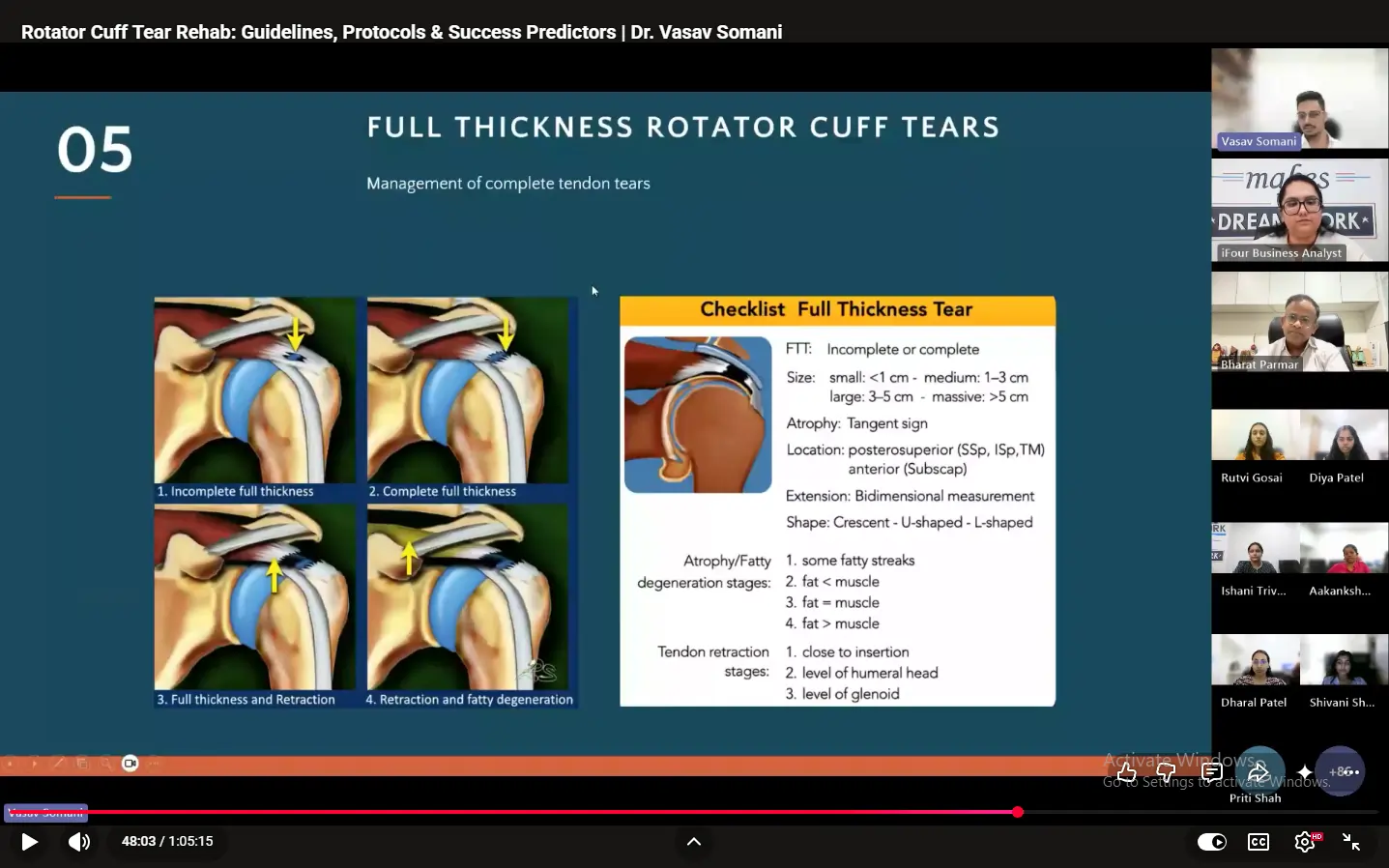
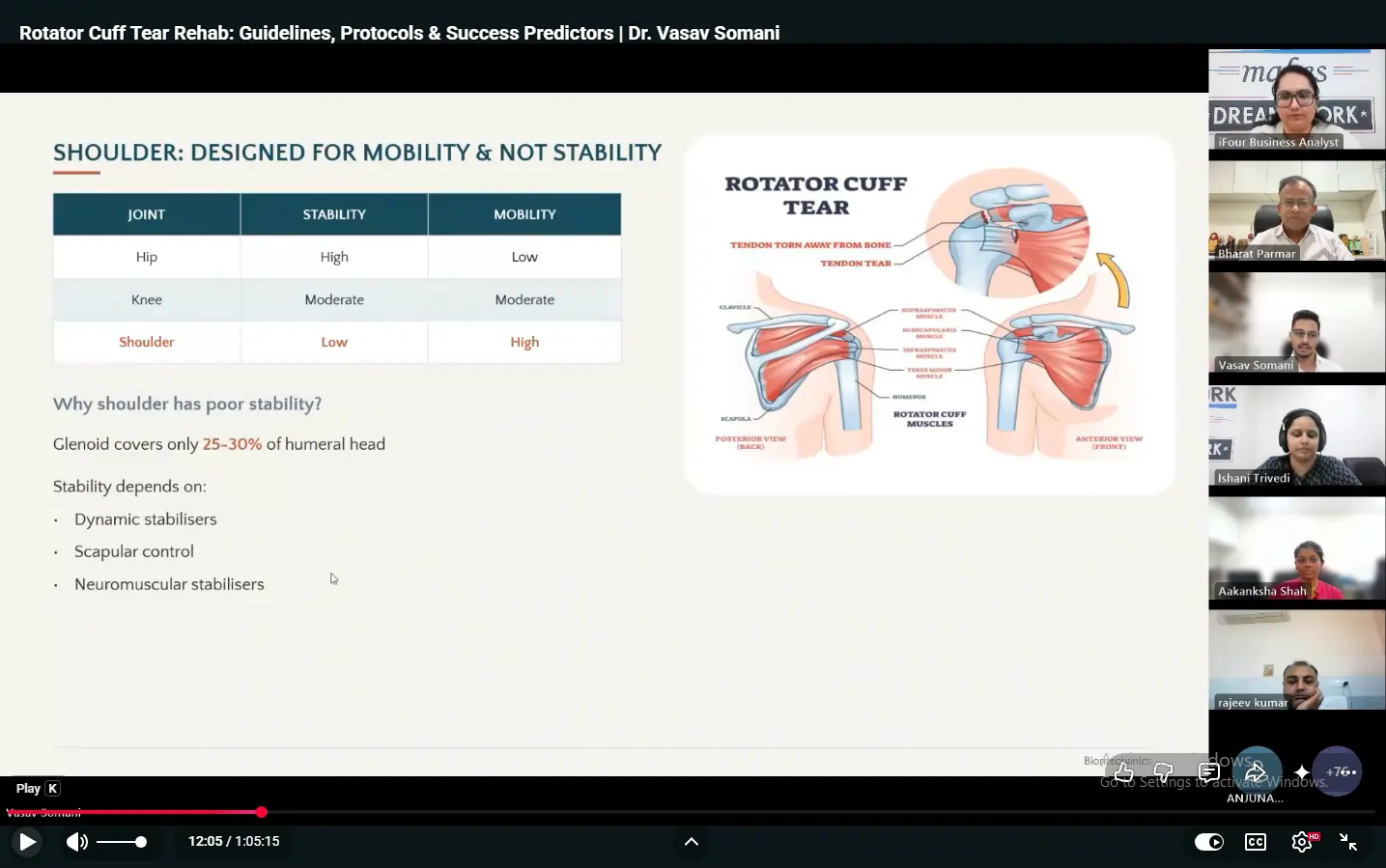
Rather than treating every rotator cuff tear as a surgical problem, he walked participants through the underlying biomechanics of the shoulder and explained why some tears remain functional while others lead to significant weakness and disability. Particular attention was given to understanding structural factors that influence progression and patient outcomes.
What stood out throughout the presentation was the balanced viewpoint. Surgery was not positioned as the answer to every problem, nor was physiotherapy portrayed as a universal solution. Instead, the discussion focused on selecting the right intervention for the right patient at the right stage of the condition.
This reflects an important principle in modern healthcare: better outcomes emerge when treatment decisions are driven by evidence, patient characteristics, and long-term goals rather than by routine or preference. The most effective care pathways are built on informed decision-making, not assumptions.
Physiotherapy and Surgery: Finding the Right Balance
A major area of discussion centered around the relationship between physiotherapy and surgical management.
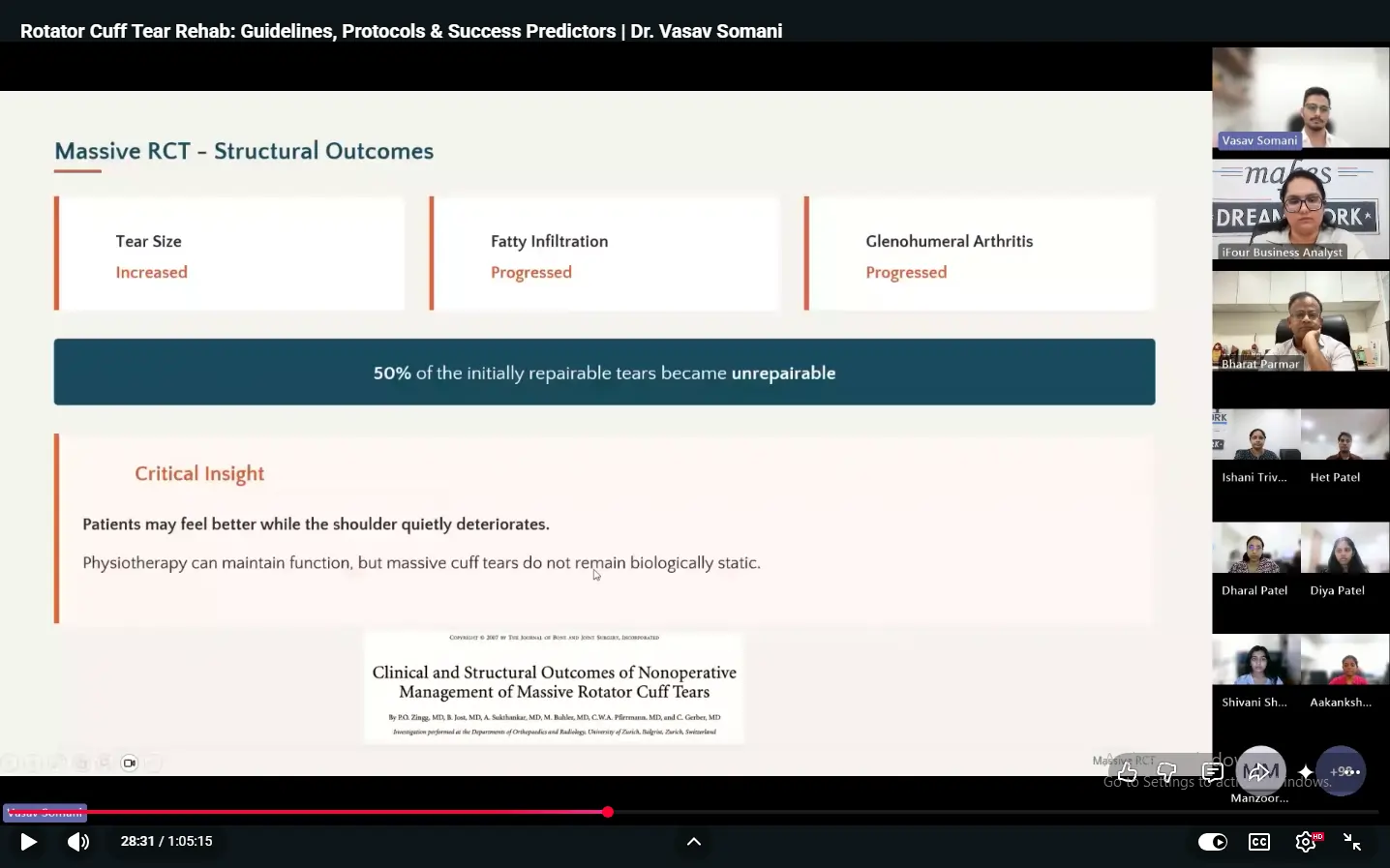
Dr. Vasav Somani emphasized that physiotherapy remains highly effective for reducing pain, improving strength, and restoring function. However, he also made it clear that rehabilitation cannot always prevent the structural progression of certain tears.
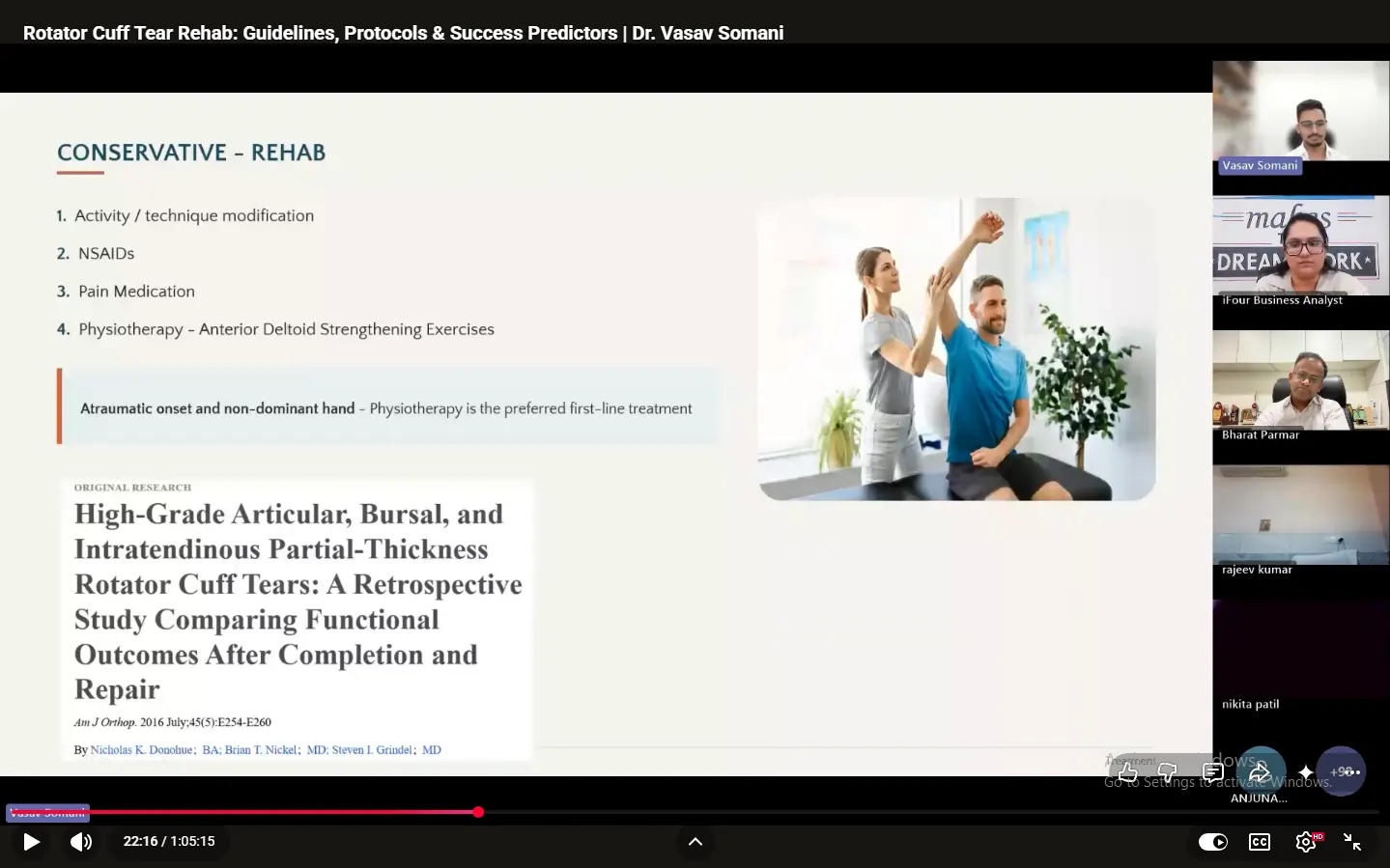
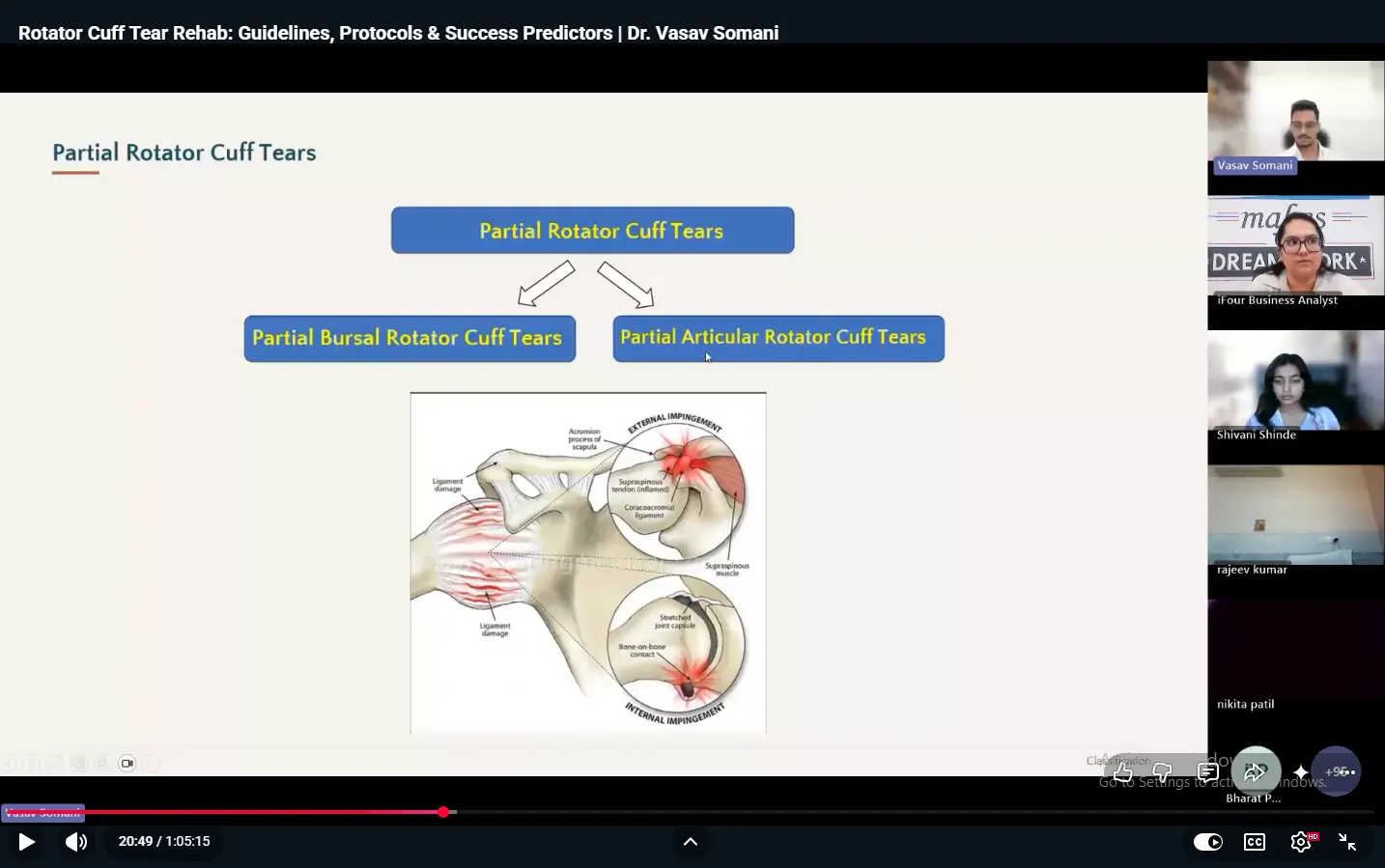
The conversation highlighted how partial tears often respond well to conservative management, while larger or more complex tears may require surgical intervention to prevent long-term deterioration.
This nuanced approach resonated strongly with attendees, particularly because it acknowledged the reality clinicians face every day - balancing patient expectations with clinical evidence.
Audience Questions Bring Practical Insights to Life
The Q&A session transformed the webinar into a highly interactive clinical discussion.
An expert physiotherapist from Tamil Nadu asked:
In response, Dr. Vasav Somani explained the importance of protecting the repair during the early healing phase and recommended a cautious approach focused on passive movement within pain tolerance.
Dr. Iswar raised a common diagnostic dilemma:
The response emphasized that treatment can begin immediately while monitoring symptoms, with advanced imaging becoming necessary when progress is not occurring as expected.
Miss Kushbu presented a complex athletic case:
The recommendation was direct. Given the patient's age and the nature of the injury, surgical repair was considered the most appropriate path to restoring function and preventing progression.
Managing Rehabilitation Expectations
The discussion also explored practical rehabilitation timelines and expectations.
Dr. Sangeeta asked:
This led to a broader conversation around protecting repairs, progressively restoring movement, and gradually returning patients to strengthening activities.
Meanwhile, Dr. Monika asked:
The answer highlighted ultrasound as a practical and cost-effective alternative capable of identifying many cuff-related pathologies.
These discussions reinforced another key message from the session: successful rehabilitation depends not only on treatment protocols but also on adapting management strategies to patient preferences, resources, and circumstances.
Addressing Complex Cases and Common Misconceptions
Some of the most valuable moments came from discussing real patient scenarios.
Dr. Duvish described a challenging inflammatory shoulder case and asked whether physiotherapy alone was sufficient.
The response stressed the importance of identifying active inflammation before initiating aggressive rehabilitation, highlighting how premature intervention can sometimes worsen symptoms.
One particularly memorable interaction came from Miss Manju, who shared her personal journey:
Her story became a real-world example of how some tears can remain stable for extended periods before symptoms eventually impact quality of life and daily function.
The session also addressed common questions about PRP and steroid injections. Dr. Shamini asked:
The discussion emphasized a cautious, evidence-based approach, distinguishing between biological healing strategies and interventions that promise more than current evidence supports.
The Bigger Takeaway: Individualized Care Drives Better Outcomes
As the webinar progressed, a clear theme emerged: rotator cuff tears should never be approached with a one-size-fits-all mindset.
The discussion consistently returned to the importance of clinical reasoning, patient selection, realistic expectations, and collaboration between physiotherapists and orthopedic surgeons.
This mirrors a broader transformation taking place across healthcare. Modern clinical excellence is built on collaboration, evidence-based practice, and patient-centered decision-making. Technology, data, and guidelines all play a role, but the greatest predictor of success remains the ability of healthcare professionals to translate knowledge into individualized care.
Complex Cases and Common Misunderstandings
Some important points stood out:
Avoid Aggressive Rehab
Don’t start aggressive rehab if there’s active inflammation - it can make things worse.
Unpredictable Stability
Some tears stay stable for years, then suddenly become symptomatic affecting daily functions.
Evolving Evidence
Treatments like PRP should be used cautiously as clinical evidence is still evolving.
One participant shared her own case of a tear that was stable for years before worsening. It highlighted how unpredictable these conditions can be.
The Bigger Message of This Webinar
A clear theme ran through the session: There is no one-size-fits-all approach for rotator cuff tears.
Good outcomes depend on:
- Proper patient selection
- Clinical reasoning
- Clear communication
- Collaboration between physiotherapists and surgeons
So, that’s how the webinar, which seemed practical, turned into an interactive and engaging session. To explore more such informative webinars, click here.
Closing Reflections
By the end of the session, attendees walked away with more than treatment protocols and rehabilitation timelines. They gained a deeper framework for evaluating rotator cuff injuries, understanding progression risks, and choosing the most appropriate management pathway for each patient.
The webinar did not promote surgery over physiotherapy or vice versa. Instead, it reinforced a more important message: successful outcomes depend on identifying the right intervention, for the right patient, at the right time.
That balanced and evidence-driven perspective is what made the discussion particularly valuable - and what left participants better equipped to make confident clinical decisions in their everyday practice.
Elevate Your Practice with AI
Manage your Physio clinic smarter, faster, and better with our AI-powered Physiotherapy software. Unify patient records, billing, telehealth, and recovery tracking in one AI driven platform.
Schedule your Demo today