How Custom Physio Software Transformed Dr. Pavan Yadav’s Practice
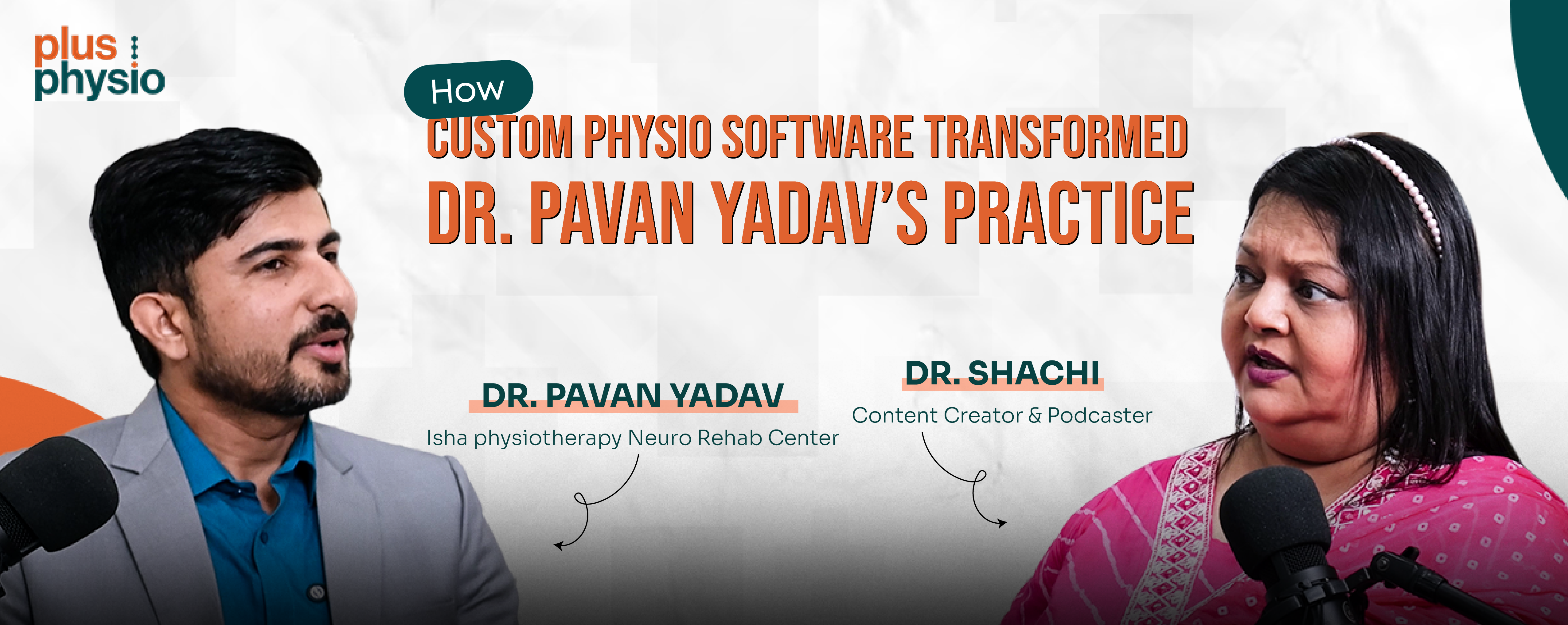
When you talk to Dr. Pavan Yadav, one thing becomes clear — he’s not just a physiotherapist, he’s also a firm believer in how technology can transform patient care. With over a decade and a half of experience, Dr. Pavan has not only used software in his practice but has actually developed his own, refining it for 15 years to meet the unique needs of physiotherapists.
Recently, he sat down with Dr. Shachi to share his journey, his thoughts on myths around physiotherapy software, and advice for practitioners still hesitant to take the tech leap.
From First Job to Founder
Dr. Pavan’s career began in January 2010 at Mission Health Multispecialty Physiotherapy Center - his first and last job as an employee. By 2016, he had founded his own institute, growing it to three branches. In 2024, he sold one branch to focus on a new venture — Isha Physiotherapy and Advanced Rehab Center, now running in two Ahmedabad locations.
Alongside his clinical work, Dr. Pavan began working on a custom-built physiotherapy software - developed from scratch with help from friends in tech — and has been upgrading it every six months based on real-world challenges and feedback.
Why Customization Matters
For Dr. Pavan, off-the-shelf solutions were never quite enough.
“Different professionals have different practices — and different needs. A one-size-fits-all approach doesn’t work.”
That’s why he chose to build something that could adapt to various physiotherapy workflows, from small clinics to high-volume centers.
Busting the Big Myths About Software
Myth 1: Switching from paper to software means losing data.
“Not true. The fear is there, but in practice, switching is smooth.”
Myth 2: It’s too difficult to use.
Dr. Pavan believes that with today’s user-friendly platforms and proper training, the learning curve is minimal.
Myth 3: It’s too expensive.
“When you buy from professionals, it’s not expensive. In the long run, software gives more profit through better scheduling, follow-ups, and service quality.”
Small Clinics vs. Big Hospitals
One common misconception is that software is only for large setups with 40–50 patients a day. Dr. Pavan disagrees.
“Software is made for everyone. You can start small — appointment scheduling, follow-ups — and then upgrade.”
In fact, he credits his own growth to consistent use of software features like automated follow-up reminders, which help retain patients and improve outcomes.
Features That Make a Difference
Dr. Pavan’s system includes:
Patient photos — so he recognizes them even years later.
X-ray and treatment records — all stored digitally.
Outcome tracking — relief scores, discharge notes, and patient ratings.
This means that even if a patient returns after years, he has their complete history at his fingertips.
On Data Security
Data theft is a common worry among healthcare professionals, but Dr. Pavan says advances in technology have made modern software secure.
“The fear is a myth. With the right systems, data tracking and theft are no longer issues.”
Advice for Fellow Physiotherapists
For those still hesitant, Dr. Pavan recommends starting small:
Begin with basic features like appointment scheduling and follow-up systems.
Let the software prove its value by saving time and improving patient engagement.
Take advantage of vendor-provided training — most platforms now offer 15–30 day onboarding programs.
His bottom line?
“If you can use WhatsApp, you can use today’s physiotherapy software.”
Listen to our podcast
Hear from real physiotherapists who’ve tried everything — what finally worked, what didn’t, and how PlusPhysio helped simplify the chaos.
Full Conversation Transcript
Here is the transcript of the conversation between Dr. Pavan Yadav and Dr. Shachi to help readers explore the discussion in real-time.
Final takeaway:
Dr. Pavan’s experience proves that technology isn’t just for large, urban clinics — it can help practices of any size grow, streamline operations, and improve patient care. The key is to start small, choose the right platform, and keep upgrading as your practice evolves.

Recent Posts
Paperwork to Smart Software Dr. Roma Shah’s Guide
August 11, 2025