
Bringing Tech to Cancer Rehab: A Conversation with Dr. Dipal Shah
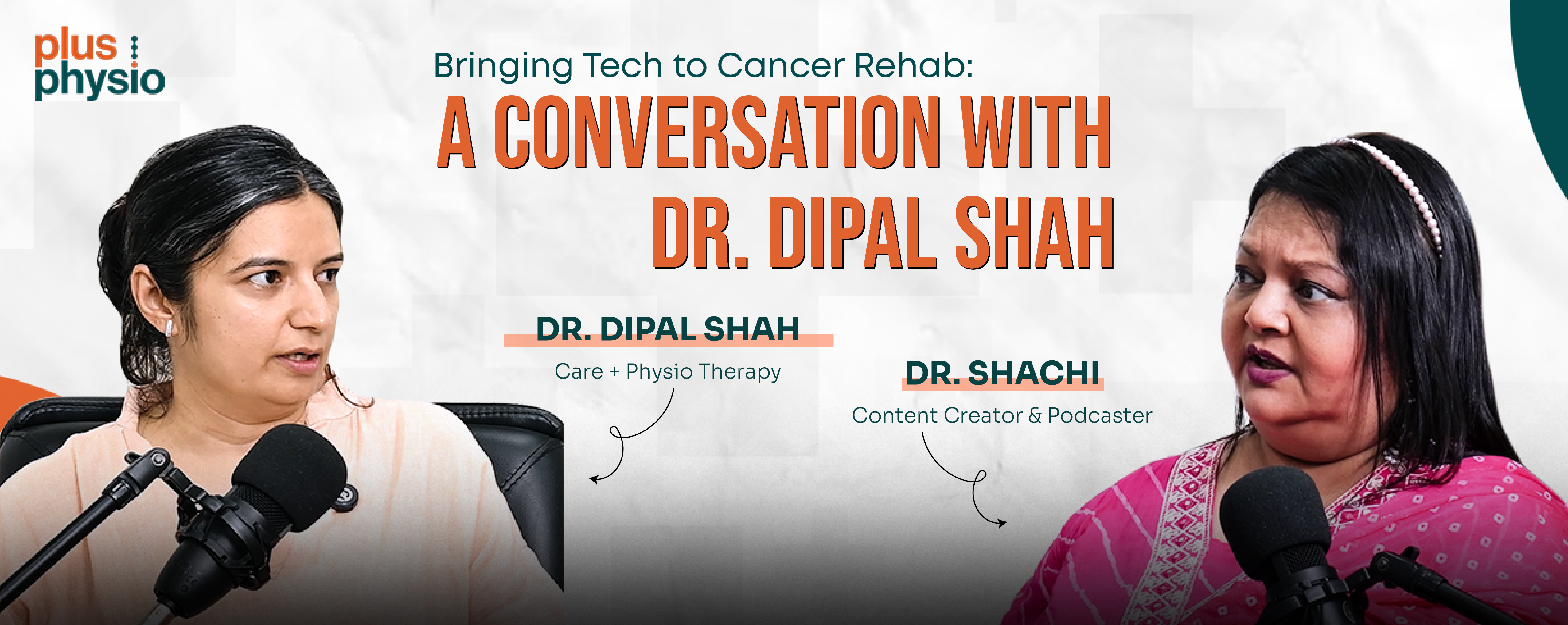
When you've been practicing physiotherapy for two decades, you've seen trends come and go. But for Dr. Dipal Shah, founder of Care Plus Physiotherapy in Ahmedabad, one thing has remained constant — her belief in personalized care for every patient.
Recently, Dr. Dipal joined Dr. Shachi for a candid discussion about her journey, her focus on post-cancer rehabilitation, and her cautious but growing interest in physiotherapy software.
From Cardiopulmonary Specialization to Cancer Rehab
Dr. Dipal's career began with a Master's degree in Cardiopulmonary Conditions. Over the years, she has treated orthopedic, neurological, and cardiac cases at her well-equipped clinic in Thaltej.
But what sets her apart is her specialization in cancer rehabilitation — helping patients regain their quality of life after treatment by preventing complications like stiffness, pain, or reduced mobility.
“Every patient is different,” she says. “So we plan and give treatment accordingly.”
She also works as a visiting physiotherapist at Rajpath Club and hospitals associated with cancer care — juggling multiple workplaces with ease.
Why Technology Took a Back Seat
Despite running a modern clinic, Dr. Dipal admits she's only recently started using software — and even then, only at her own practice.
Her hesitation?
- Cost: “Earlier it was quite expensive.”
- Training needs:: “You need a separate staff and time to train them.”
- User experience: “They weren't very user-friendly.”
At other centers she works in, reception staff manage bookings using their own systems. But for her own patients, most appointments still happen over the phone — a reflection of her strong word-of-mouth referrals.
AI in Physiotherapy: A Helping Hand, Not a Replacement
The conversation soon turned to AI. Could machines one day take over physiotherapy?
Dr. Dipal’s answer was clear:
“Physiotherapy is a very hands-on thing. Machines can help — they can save time and energy — but they can't replace the human touch.”
She already uses small AI-assisted devices that auto-program treatment settings based on the patient's condition. Still, she believes the physiotherapist's expertise remains irreplaceable, much like how writers feel about AI-generated content.
The Follow-Up Challenge
One area where Dr. Dipal sees a clear gap is patient engagement after treatment.
Patients often miss their follow-up appointments, and with so many cases to track, it's easy for her team to forget to send reminders.
“A software that manages follow-ups would look more professional and make patients feel cared for,” she says.
This, she believes, could directly improve treatment outcomes.
Why an Online System Makes Sense
For Dr. Dipal, the appeal of software isn't just about booking appointments.
It's about tracking her clinic's performance — seeing how many patients were treated in a year, analyzing trends, and assessing growth.
“If I could access patient records online from anywhere, it would make management so much easier.”
However, she's firm that ease of use will make or break her adoption of any platform.
Advice for New Physiotherapists
After 20 years without relying on tech, Dr. Dipal's advice is straightforward:
It's about tracking her clinic's performance — seeing how many patients were treated in a year, analyzing trends, and assessing growth.
“Patients today are tech-savvy. If physiotherapists start using software earlier in their practice, they'll save time and energy. Go one step at a time, but start.”

Listen to our podcast
Hear from real physiotherapists who’ve tried everything — what finally worked, what didn’t, and how PlusPhysio helped simplify the chaos.
Full Conversation Transcript
Below is the transcript of the conversation between Dr. Utsav Parikh and Dr. Shachi for readers who want to explore the discussion in its original format.
Final Thoughts
Dr. Dipal is ready to embrace physiotherapy software — provided it's smooth, user-friendly, and tailored to her needs.
Her journey highlights a challenge many experienced practitioners face: balancing deeply personal care with the efficiency and reach that technology can bring.
And as she steps into this new chapter, one thing is certain — her patients will continue to benefit from both her hands-on expertise and, soon, smarter digital support.

Recent Posts
Paperwork to Smart Software Dr. Roma Shah’s Guide
August 11, 2025